The Expert's Guide to Self-Printing Posters, Canvases, and Framed Art
You've designed something you're proud of. Maybe it's a sound wave from a song that means everything to you, or a piece of custom art for a gift. You've got the file. Now you need to get it on a wall, and suddenly there are a dozen decisions to make before you can even talk to a printer.
Format first: poster, canvas, or framed print? Then size. Then material. Then where to actually get it printed. Most people skip the research and end up with something that looks smaller than expected, prints with the wrong finish, or arrives too late.
This guide walks through every decision in order.
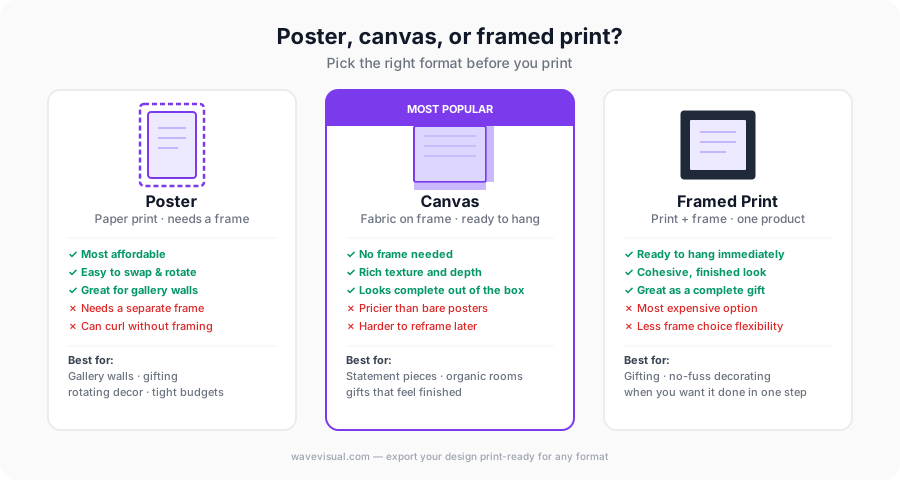
Poster, canvas, or framed print: pick your format first
Before you think about sizes or paper types, decide what you're hanging. These three formats have different looks, different price points, and different rules for where they work best.
Posters (paper prints)
A poster is a flat paper print and the most affordable option. It needs a frame, though. Without one it'll curl and look unfinished. With a good frame, a poster can look just as sharp as anything you'd buy in a gallery.
Go with a poster if you're building a gallery wall and mixing several pieces, if you want art you can swap out seasonally, or if you're gifting and want to include a frame as part of the present.
Canvas prints
Canvas is printed directly onto fabric stretched over a wooden frame. No glass, no outer frame needed. The texture adds something paper can't replicate, and gallery-wrapped edges (where the image wraps around the sides) mean it looks finished straight out of the box.
Canvas is best as a standalone statement piece, especially in rooms with a warmer feel. It also makes a better gift than a bare poster because it requires zero extra work from the recipient.
Framed posters
Some print shops, and most print-on-demand services like Gelato, offer framed posters as a single product. The print comes already mounted behind glass in a frame. More expensive than ordering separately, but it's genuinely convenient when you want a specific frame style and don't want to hunt for it.
Budget tight? Go poster and frame it yourself. Giving it as a gift, or just want it done? Canvas or framed print is worth the extra cost.
Size: the decision most people get wrong
Most people order too small. A piece that looks bold on screen can disappear on a real wall, especially next to a sofa or bed. Go larger than your instinct says.
Standard print sizes and what they look like on a wall
| Size | Dimensions | Best for |
|---|---|---|
| A4 | 210 × 297 mm (8.3 × 11.7 in) | Desk frames, small gallery wall accents |
| A3 | 297 × 420 mm (11.7 × 16.5 in) | Bedroom walls, medium gallery pieces |
| A2 | 420 × 594 mm (16.5 × 23.4 in) | Living room focal points |
| A1 | 594 × 841 mm (23.4 × 33.1 in) | Large statement walls |
| 11 × 14 in | 279 × 356 mm | Classic photo print, portrait orientation |
| 5 × 4 in | 127 × 101 mm | Small accent, desk or shelf display |
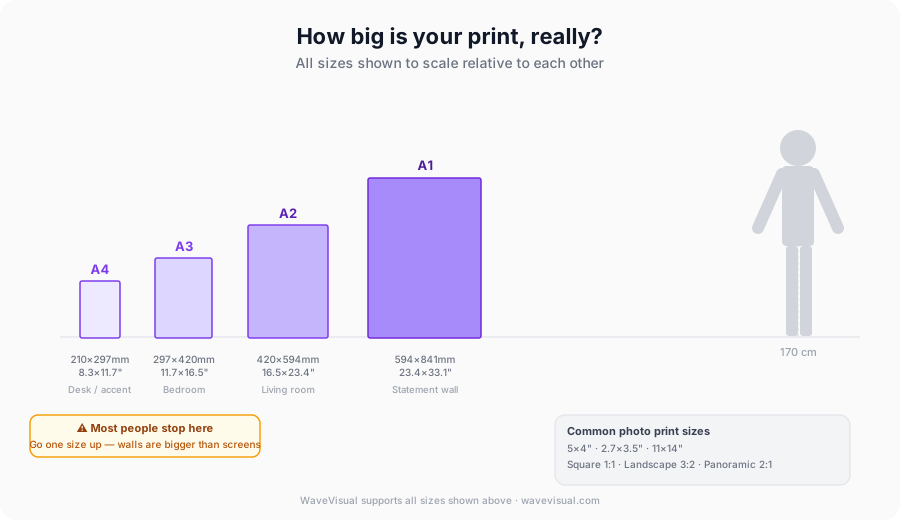
WaveVisual exports in all the sizes above plus wider landscape formats (3:2, 2:1), taller portrait formats (2:3, 1:2), and square, so you can match the export to whatever your print shop offers without cropping.
Sizing by room
Bedroom: A3 is the sweet spot for most bedroom walls. Go to A2 if you want something above the headboard that holds its own against the furniture.
Living room: Anything smaller than A2 tends to get lost above a sofa. A1 or larger works well as a single centerpiece.
Hallway or staircase: Tall portrait formats (A4 or A3 in portrait orientation) fit narrow wall sections better than landscape.
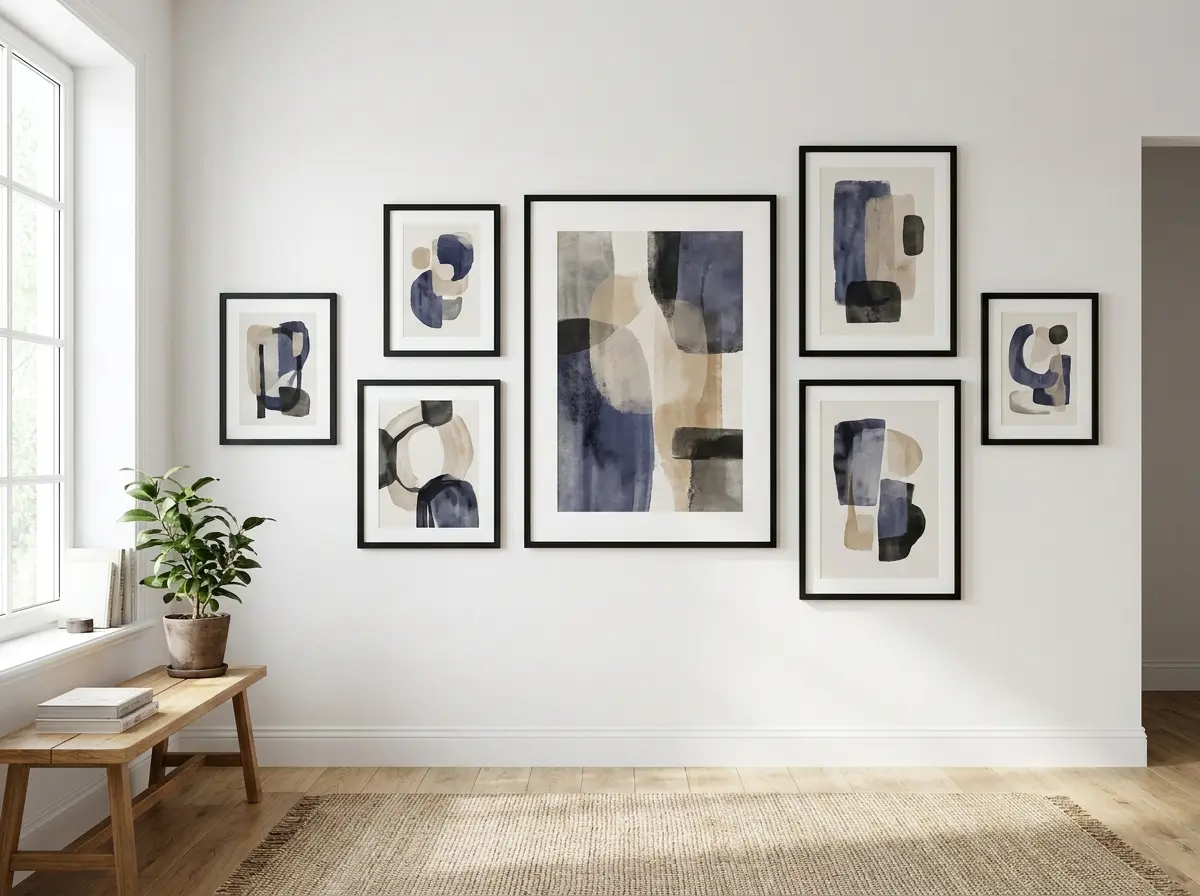
Gallery wall: Mix sizes deliberately. One large anchor piece (A2 or A1) surrounded by smaller prints creates more visual interest than everything being the same size. Society6's wall art size guide has good examples of this.
The furniture ratio
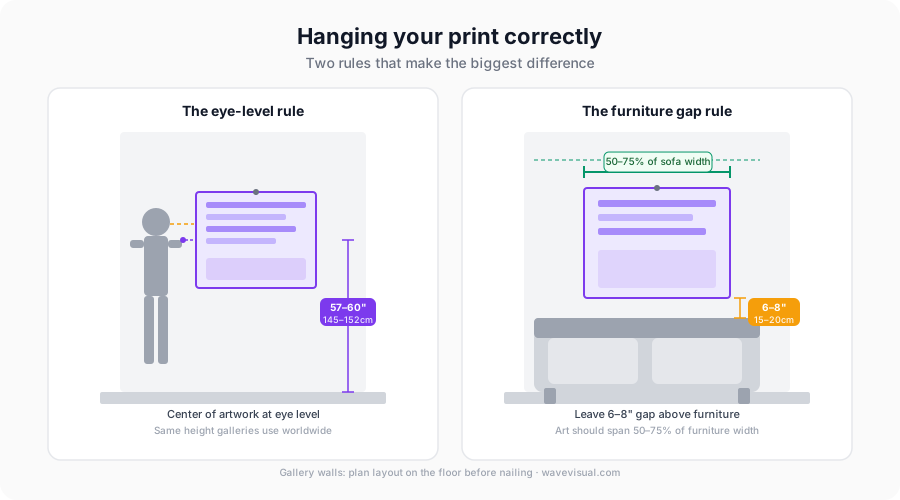
Art should span roughly 50 to 75% of the width of whatever it hangs above. Above a 2-meter sofa, that's a print or grouping between 1 and 1.5 meters wide. Nations Photo Lab's wall art guide breaks this down room by room.
Orientation
- Landscape (wider than tall): above sofas, sideboards, low furniture
- Portrait (taller than wide): narrow walls, stairwells, beside a doorway
- Square: works anywhere, stacks well in grid gallery arrangements
Paper and canvas material: what actually matters
For paper posters: finish matters more than brand
Matte paper absorbs light rather than reflecting it. No glare. Colors are slightly flatter than glossy, but the look is clean and works in any room. For art with fine detail or text, it's usually the right call.
Glossy paper makes colors pop more than anything else. The trade-off is that it reflects light sources hard. Near a window or under ceiling lights, you'll see the reflection before you see the print. Save glossy for darker rooms where that isn't a problem.
Satin (also called luster or semi-gloss) is what most print shops recommend by default. More color punch than matte, nowhere near the glare of glossy. When in doubt, go satin. Gelato's guide to satin paper explains the difference in practical terms.
Paper weight matters too. Anything below 180gsm feels flimsy. For something meant to be framed and kept, look for 200 to 250gsm or higher.
Quick reference:
- Bright room, lots of natural light: matte
- Dark or moody room: glossy
- Not sure: satin
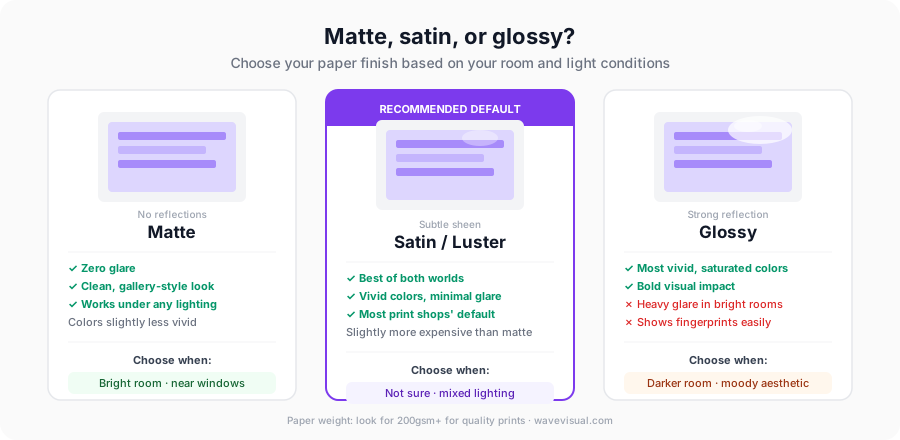
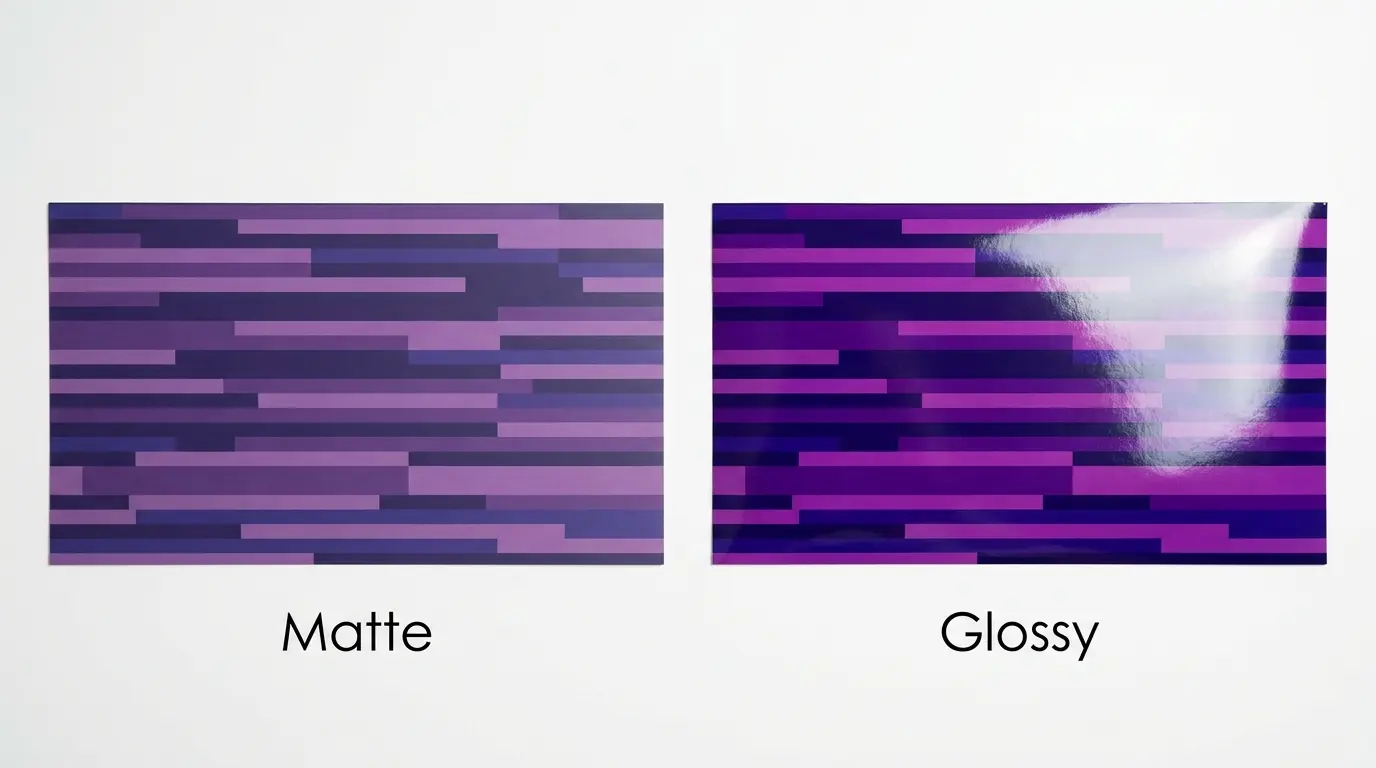
PermaJet's finish comparison goes into the technical side if you want to read more.
For canvas: thickness is the main call
Most canvas prints use a poly-cotton blend. Durable, holds color well, and handles moisture better than pure cotton. Pure cotton has a finer texture and a slightly more expensive feel, but you'll mainly find it at specialist printers.
The more visible decision is wrap thickness. Gallery wrap (1.5 inches / 3.8 cm) looks substantial and is standard for art canvas. A thinner wrap (0.75 inches / 1.9 cm) is cheaper but can look less deliberate on the wall.
If your design has a lot happening near the edges, ask the printer about "mirror wrap" or "color wrap" so they extend the image rather than cut into it.
How to get it printed
Local print shops (recommended)
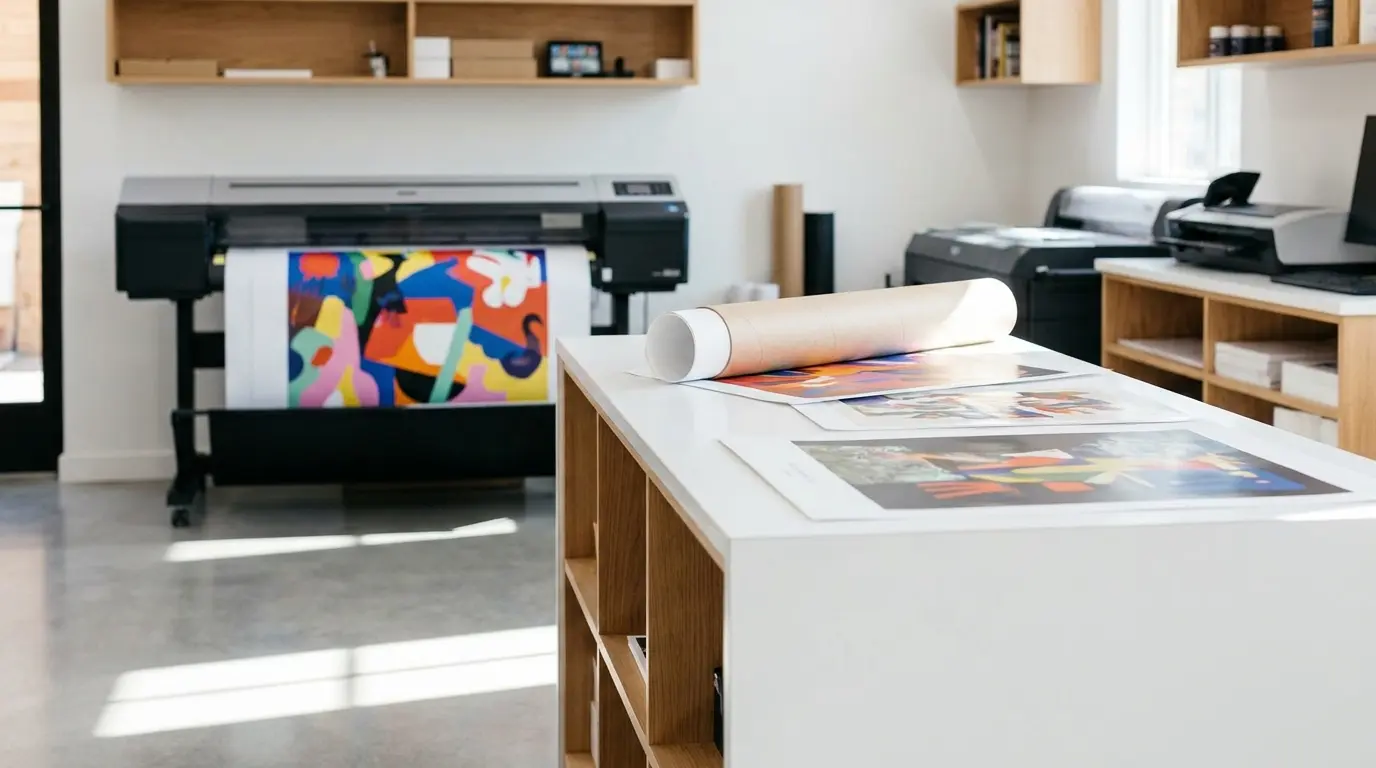
A local print shop lets you see paper samples before you commit, which is genuinely useful when picking a finish. Search for "fine art printing" or "giclée printing" in your area. These are the shops that care about output quality, not just throughput.
When you call or visit, ask:
- "Do you print on matte, satin, and glossy?"
- "What DPI do you print at?" (300 DPI is the standard)
- "Do you offer canvas wraps? What thickness?"
- "What file format do you need?"
- "What's your maximum print size?"
Bring a high-resolution PNG or PDF. WaveVisual exports at print-ready resolution, so you can hand the file directly to the printer.
Print-on-demand (when local isn't an option)
Print-on-demand is a solid alternative if there's no good print shop nearby, or if you just want to order from home. You give up the ability to see samples beforehand, and lead times are longer.
Printful has a good range of sizes, finishes, and canvas options. One of the most established services in the space.
Printify is worth checking for price. Wide catalog including framed posters and canvas wraps.
Gelato prints locally in 32 countries, so delivery is faster than services that ship from a single warehouse. They also offer museum-grade fine art paper if you want to go higher end.
Canva Print is the easiest to use if you're already in the Canva ecosystem. The design-to-print workflow is built in.
Upload your WaveVisual export, pick size and finish, and order. Most services let you preview how the image will look at the selected dimensions before you confirm.
Hanging it right
The eye-level rule
The center of the artwork should sit at roughly 57 to 60 inches (145 to 152 cm) from the floor. That's average standing eye level, and it's the same height galleries use. Studio McGee's hanging guide explains how to apply this when there's furniture in the way.
Above furniture
Leave a 6 to 8 inch (15 to 20 cm) gap between the top of the furniture and the bottom of the frame. Smaller than that and it looks like an afterthought. Too much and the art floats away from the room.
Gallery walls
Map the layout on the floor before you touch a nail. Arrange everything, step back, move things around, then trace the final arrangement onto paper and tape it to the wall as a drilling template. Framebridge's gallery wall guide has a solid walkthrough.
Frame color
Black is the safest choice and works with almost any wall color or art style. White brightens a space and suits minimal interiors. Natural wood adds warmth and fits well in earthy, organic rooms.
The short version
- Pick your format: poster (needs a frame), canvas (ready to hang), or framed print (all-in-one)
- Pick your size: go larger than instinct; measure your wall and furniture first
- Pick your finish: matte for bright rooms, glossy for dark rooms, satin when unsure
- Export your design: WaveVisual exports print-ready files at the right resolution
- Find a printer: local fine art print shop first, print-on-demand if not
If you haven't designed your piece yet, start in the WaveVisual editor →
More from WaveVisual: the sound wave generator, sound wave video, and pricing.